Introduction
You finished Naruto. You hit the credits on Shippuden. Now there’s a sequel sitting in front of you with nearly 300 episodes, and you’re not sure if Boruto is worth your time — or just legacy bait dragging on a great name. That feeling stops thousands of fans before they reach the parts that actually matter.
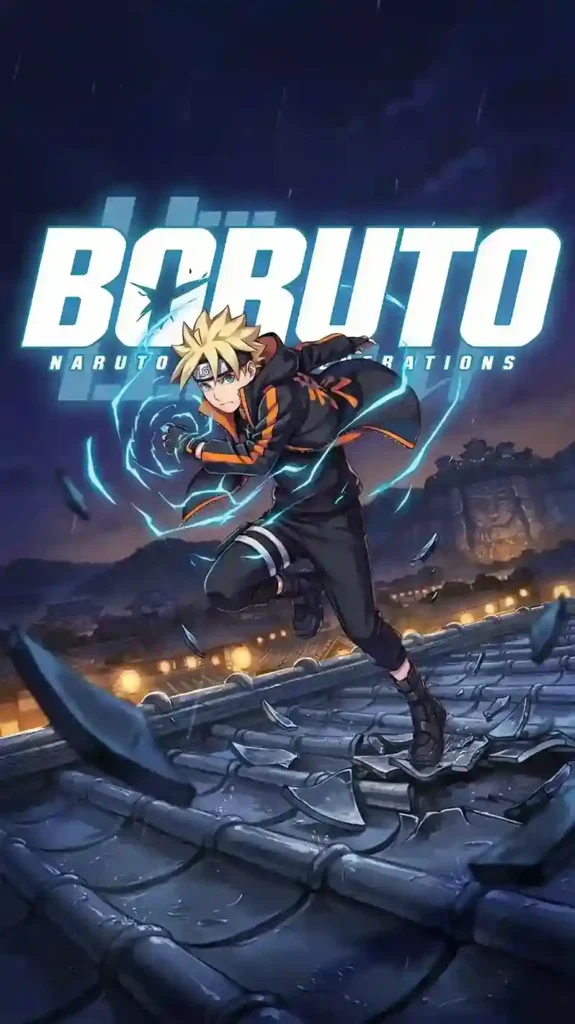
Boruto does not win you over in episode one. But once it does — especially after the timeskip resets the whole board — it becomes one of the most compelling stories running in shonen today. This guide covers everything: filler list, character breakdowns, manga vs. anime, Two Blue Vortex, and the game. No fluff.
What Is Boruto? The Sequel That Took Time to Earn Its Place
Boruto is the direct continuation of Masashi Kishimoto’s Naruto universe. The story centers on Boruto Uzumaki, son of the Seventh Hokage Naruto and Hinata Hyuga, growing up in a village at peace — and discovering that peace carries its own kind of danger.
The manga launched in May 2016, written by Ukyō Kodachi and illustrated by Mikio Ikemoto. Kishimoto himself took over as writer in 2020 at Chapter 52, a shift that changed the tone and ambition of the story completely.
The anime adaptation by Studio Pierrot followed in April 2017, running weekly until March 2023. The world feels like Naruto — same villages, many familiar faces — but layered with modern technology that the original never had.
Series quick facts:
| Detail | Info |
|---|---|
| Manga debut | May 2016 |
| Anime debut | April 5, 2017 |
| Total anime episodes | 293 |
| Original writer | Ukyō Kodachi |
| Current writer | Masashi Kishimoto |
| Illustrator | Mikio Ikemoto |
| Publisher | Shueisha (V Jump) |
| Anime studio | Studio Pierrot |
| Official stream | Crunchyroll |
| Manga (EN) | Viz Media, Manga Plus |
Boruto: Naruto Next Generations — The Original Anime Explained
Boruto: Naruto Next Generations ran 293 episodes between April 2017 and March 2023. It follows Boruto through the ninja academy, his early missions, the chunin exams, and eventually the full confrontation with the Kara organization and the Otsutsuki threat.
The pacing is uneven early on. The first 50 episodes mix solid canon content with a lot of filler that adds nothing to the main plot. But the series finds its feet once the Versus Momoshiki Arc arrives — and it never fully loses it again after that.
After Kishimoto stepped in at Chapter 52, the anime’s source material improved sharply. The Isshiki Arc (Episodes 177–216) features some of the most emotionally heavy writing the franchise has produced, including the death of Kurama — a moment that genuinely hit fans hard.
Canon arcs in Boruto: Naruto Next Generations:
| Arc Name | Episodes | Status |
|---|---|---|
| Academy Entrance Arc | 1–15 | Canon |
| Sarada Uchiha Arc | 17–24 | Canon (Naruto Gaiden) |
| Versus Momoshiki Arc | 51–66 | Canon (Film adaptation) |
| Mitsuki’s Disappearance Arc | 71–92 | Canon |
| Jugo Arc | 98–103 | Canon |
| Mujina Bandits Arc | 127–136 | Canon |
| Kara Actuation Arc | 141–151 | Canon |
| Ao Arc | 157–176 | Canon |
| Isshiki / Kara Endgame Arc | 177–216 | Canon |
| Chunin Re-Exams Arc | 221–227 | Canon |
| Code’s Assault Arc | 244–293 | Canon |
Boruto Two Blue Vortex — The Story That Finally Got Serious
Boruto: Two Blue Vortex is the second chapter of the Boruto manga, launching in August 2023 in V Jump. It begins after a three-year jump forward in time and rewrites the entire situation fans thought they understood.
Kawaki, using Omnipotence — a reality-altering ability passed through his Otsutsuki connection — rewrote the memories of everyone in Konoha. The village now believes Boruto killed Naruto and is the enemy. Kawaki is treated as Naruto’s real son. The truth only a handful of people remember.
Boruto escaped before the trap closed. He spent three years in hiding, training under Sasuke, and came back harder, faster, and carrying techniques nobody in the village has seen before.
What makes Two Blue Vortex different:
- Boruto’s transformation from reckless kid to disciplined shinobi
- New jutsu: Rasengan Uzuhiko and Surjin (advanced space-time techniques)
- The Ten-Tails clones — monstrous new threats born from an Otsutsuki feeding cycle
- Sarada Uchiha stepping into a central leadership role
- Code’s growing army placing pressure on a village already divided
- Political tension running through every chapter
As of 2025, Two Blue Vortex is ongoing and releases monthly. You can read it officially and for free through Viz Media and Manga Plus by Shueisha.
The Boruto Manga — Where the Real Story Lives First
The Boruto manga has always been ahead of the anime by months, sometimes years. By the time the anime reached the Isshiki Arc, manga readers were already in new territory the anime hadn’t touched.
The manga runs in two distinct phases:
- Boruto: Naruto Next Generations — Chapters 1–80, covering the academy, Kara, Isshiki, and the lead-up to the timeskip
- Boruto: Two Blue Vortex — Its own chapter numbering, beginning with the post-timeskip world
Chapters 35–55 — the Isshiki invasion, Kurama’s death, and Naruto pushed to his absolute limit — are considered the strongest stretch in the entire run. Kishimoto’s fingerprints are all over these chapters.
Where to read the Boruto manga officially:
| Platform | Access | Cost |
|---|---|---|
| Viz Media | Latest chapters + archive | Free (first chapter) / Subscription |
| Manga Plus | Latest 3 chapters always free | Free |
| Shonen Jump App | Full archive | Subscription |
If you want to skip anime filler entirely, the manga is the cleanest path through the story.
Boruto Uzumaki — Character Breakdown and Growth
Boruto Uzumaki is the son of Naruto, the Seventh Hokage, and Hinata Uzumaki (née Hyuga). He grew up in the shadow of a father the entire world admires — and resented it.
Early Boruto clashes with his father, cheats in the chunin exams, and leans into shortcuts the original series framed as character flaws worth addressing. That’s intentional. The story builds distance between them before the emotional payoff earns its weight.
After the timeskip, he is completely different. Three years of training under Sasuke, surviving as a fugitive, and carrying the knowledge that his entire home village views him as an enemy — that experience changes a person. The post-timeskip version of this character is someone who acts only when necessary and strikes when it counts.
Complete Boruto Filler List — Every Episode Ranked (Skip or Watch)
One of the biggest reasons fans abandon this series early is filler. The Boruto filler list is long, and without a guide, you’re looking at roughly 80–100 episodes that contribute zero to the main plot.
The rule of thumb: if an arc doesn’t connect to Kara, Karma seals, or the Otsutsuki mythology, it’s most likely filler.
Complete Boruto Filler List (All 293 Episodes):
| Episode Range | Arc / Content | Watch? | Reason |
|---|---|---|---|
| 1–15 | Academy Entrance Arc | ✅ Watch | Sets up characters and world |
| 16 | Academy side story | ❌ Skip | No plot relevance |
| 17–24 | Sarada Uchiha Arc | ✅ Watch | Based on Naruto Gaiden manga |
| 25–32 | School Trip Arc | ⚠️ Optional | Anime-only, light entertainment |
| 33–50 | Graduation Exams + Mixed | ⚠️ Ep 37–43 only | Heavy filler padding around thin canon |
| 51–66 | Versus Momoshiki Arc | ✅ Must Watch | Movie adaptation, fully canon |
| 67–70 | Start of Mitsuki Arc | ✅ Watch | Connects to canon arc |
| 71–92 | Mitsuki’s Disappearance Arc | ✅ Watch | Fully canon, strong character work |
| 93–97 | Steam Ninja Scrolls | ⚠️ Optional | Anime-only side story |
| 98–103 | Jugo Arc | ✅ Watch | Canon, introduces Karma concept |
| 104–111 | Cho-Cho Arc | ❌ Skip | Pure filler |
| 112–126 | Various filler content | ❌ Skip | No story impact |
| 127–136 | Mujina Bandits Arc | ✅ Watch | Canon, good character development |
| 137–140 | Filler block | ❌ Skip | Filler |
| 141–151 | Kara Actuation Arc | ✅ Watch | Introduces Kara organization |
| 152–156 | Mixed / filler | ⚠️ Optional | Light canon threads |
| 157–176 | Ao Arc | ✅ Watch | Canon, first major Kara confrontation |
| 177–216 | Isshiki / Kara Endgame Arc | ✅ Must Watch | Best arc in the series |
| 217–220 | Post-arc filler | ❌ Skip | Filler |
| 221–227 | Chunin Re-Exams Arc | Watch | Canon, story moves forward |
| 228–243 | Labyrinth Game Arc | Optional | Mixed, some canon elements |
| 244–293 | Code’s Assault Arc | Watch | Final canon arc before timeskip |
Shortest canon-only path: Episodes 1–15 → 17–24 → 37–43 → 51–92 → 98–103 → 127–136 → 141–151 → 157–216 → 221–227 → 244–293.
This cuts your watch time by roughly 35% without losing any story.
Main Boruto Characters You Need to Know
The Boruto characters carry two responsibilities: build their own identities and exist in the shadow of the most famous ninja in the world. Most of them manage this better than critics give them credit for.
New generation — main cast:
| Character | Role | Key Ability / Trait |
|---|---|---|
| Boruto Uzumaki | Protagonist | Jougan, Karma Seal, advanced Rasengan |
| Sarada Uchiha | Lead kunoichi | Sharingan, medical ninjutsu |
| Mitsuki | Team ally | Sage Mode, snake-type jutsu |
| Kawaki | Anti-hero / antagonist | Karma Seal, advanced body modifications |
| Himawari Uzumaki | Boruto’s sister | Byakugan, growing Otsutsuki connection |
| Sumire Kakei | Former class rep | Nue summon, shifted to research role |
| Inojin Yamanaka | Classmate | Mind Transfer Jutsu, Super Beast Scroll |
| Shikadai Nara | Team member | Shadow techniques |
Legacy characters — still active:
| Character | New Role | Status in Series |
|---|---|---|
| Naruto Uzumaki | Seventh Hokage | Lost Kurama; reduced power but still relevant |
| Sasuke Uchiha | Boruto’s mentor | Lost Rinnegan; sharp as ever |
| Sakura Haruno | Medical head | Active, powerful in her own right |
| Hinata Uzumaki | Boruto’s mother | Active, Byakugan-class fighter |
| Shikamaru Nara | Hokage’s advisor | Became Eighth Hokage post-timeskip |
| Kakashi Hatake | Retired Hokage | Advisory role, occasional involvement |
The Boruto Timeskip — What Changed and Why It Mattered
The Boruto timeskip is the defining turning point of the entire franchise. Three years pass between the end of the original manga and the start of Two Blue Vortex — and almost nothing comes out looking the same.
The setup: Kawaki, obsessed with protecting Naruto at all costs, unlocked Omnipotence through his Otsutsuki godhood. He used it to rewrite the memories of every person in Konoha. Overnight, the village believes Boruto murdered Naruto and that Kawaki has always been Naruto’s son. Only a few people — including Sarada — retain the truth.
Boruto escaped the trap with Sasuke’s help. What followed was three years of training in isolation, developing techniques nobody in Konoha has ever seen, and preparing for the moment he returns.
Key timeskip events — full breakdown:
| Event | What It Means |
|---|---|
| Kawaki activates Omnipotence | All of Konoha’s memories rewritten |
| Boruto declared a fugitive | His home village now hunts him |
| Three years of training | Boruto develops Surjin and Uzuhiko Rasengan |
| Code activates Ten-Tails | A new category of threat emerges |
| Sarada retains true memories | She becomes a crucial internal ally |
| Shikamaru becomes Eighth Hokage | Leadership shift inside the village |
| Naruto and Hinata sealed | Kawaki removes them from play |
The timeskip gave the story exactly what it needed: real stakes, a protagonist who earned his place, and a situation with no clean solution.
Naruto to Boruto: Shinobi Striker — The Game Explained
Naruto to Boruto: Shinobi Striker is an online multiplayer action game developed by Soleil Ltd. and published by Bandai Namco Entertainment. It launched in August 2018 for PlayStation 4, Xbox One, and PC.
The game builds on both the Naruto and Boruto character rosters and focuses on 4v4 team combat. Instead of traditional fighting game mechanics, it emphasizes movement — wall-running, aerial battles, and chaining signature jutsu mid-chase.
What the game offers:
- Battle modes: Barrier Battle, Flag Battle, Base Battle, Extermination Mission
- Fighter types: Attack, Ranged, Defense, Heal (each plays completely differently)
- Master System: Learn new jutsu by training under characters like Naruto, Minato, Itachi, and Boruto
- DLC content: Regular new character packs — including additions from Two Blue Vortex
- Online focus: Built entirely around co-op and competitive online play
The game received solid reviews for its movement system and character variety. It remains active with ongoing DLC support as of 2025.
For fans who want to experience Boruto’s post-timeskip fighting style without waiting for more anime content, the game fills that gap with playable versions of new-era characters.
Boruto Anime vs. Manga — What’s Actually Different?
The Boruto manga and anime tell the same core story but differ significantly in execution, pacing, and artistic tone.
Pacing is the biggest gap. What the manga covers in 8–10 chapters often takes the anime 18–25 episodes to deliver. That gap gets filled with filler arcs, side missions, and extended fights.
Tone differs too. Mikio Ikemoto’s manga art runs sharp and angular, with dynamic panel compositions that read faster than the anime’s animated equivalent. Some manga fights land harder on the page than they do animated.
Story accuracy is high where the anime adapts from the manga directly. The Isshiki Arc anime adaptation (Episodes 177–216) stays faithful and even expands emotional beats without padding the plot.
Key differences — side by side:
| Element | Manga | Anime |
|---|---|---|
| Pacing | Tight, monthly release | Weekly with filler padding |
| Kurama’s death | Hits fast and hard | More drawn out with extra scenes |
| Filler content | Zero | ~30–35% of total runtime |
| Kawaki’s backstory | Concise | Extended across multiple episodes |
| Sarada’s role | Central throughout | Reduced in some anime-original arcs |
| Post-timeskip story | Ongoing in Two Blue Vortex | Not yet adapted (as of 2025) |
If you’ve already watched the anime, the manga still feels different enough to be worth reading. The tone is tighter and the story decisions hit differently without filler surrounding them.
Why Boruto: Two Blue Vortex Is Worth Reading Right Now
Every criticism aimed at the original Boruto run — slow pacing, an unlikable lead, threats that never felt real — Two Blue Vortex addresses directly.
Kishimoto controls the full story, and the improvement is visible in every chapter. The power system feels grounded again. The new villain threats — including the Ten-Tails clones that consume Otsutsuki energy — carry genuine danger. Boruto himself is a character readers want to follow, not a kid who’s hard to root for.
As of mid-2025, the manga builds toward confrontations on three fronts: Code’s expanding army, the risk of Momoshiki taking control of Boruto’s body, and the political reality inside Konoha that makes coming home nearly impossible.
Read it officially at Viz Media or Manga Plus — the latest chapters are always free on both platforms.
6 Frequently Asked Questions About Boruto
Q1: Is Boruto worth watching if you finished Naruto?
Short answer: Yes — but use the filler list. The Versus Momoshiki Arc and the Isshiki Arc alone are worth the effort.
The series pays off the emotional setup from Naruto in ways the original couldn’t, particularly around Naruto and Sasuke stepping into father and mentor roles. Jump in with the filler guide and you’ll move through the good content fast.
Q2: What exactly is Boruto: Two Blue Vortex?
Short answer: It’s the second part of the Boruto manga — darker, faster, and set three years after the original ended.
It picks up with Boruto as a fugitive, hunted by his own village after Kawaki rewrote everyone’s memories. The story moved to monthly releases and raised the quality bar significantly from where the original left off.
Q4: Who are the most important Boruto characters?
Short answer: Boruto Uzumaki, Sarada Uchiha, Kawaki, and Mitsuki form the core four. Naruto and Sasuke remain active but shift into supporting roles.
Post-timeskip, Sarada becomes arguably the most important character after Boruto himself, given her position inside the village and her role as someone who remembers the truth.
Q5: What happened during the Boruto timeskip?
Short answer: Kawaki used Omnipotence to rewrite the village’s memories — making them believe Boruto killed Naruto. Boruto escaped and trained for three years before returning in Two Blue Vortex.
Naruto and Hinata were sealed away by Kawaki as part of his plan to protect them at any cost. Shikamaru became the Eighth Hokage to fill the leadership gap.
Q6: Is the Boruto manga better than the anime?
Short answer: Most readers say yes — especially after Kishimoto took over. The manga has no filler, tighter pacing, and cleaner story decisions throughout.
The anime is still worth watching for the visual experience of key arcs. But if you want the story without the noise, the manga is the better version.
Where Do You Go From Here?
If you’re new to the franchise, start with the anime and the filler guide above.
If you already finished the anime and want to know what comes next, jump directly into Boruto: Two Blue Vortex. It starts fresh enough that you don’t need to read the original manga first, and it delivers on every promise the first arc made.
Boruto is not a flawless series. But it’s a serious one — with real emotional stakes, a lead character who earned his story, and a timeskip that reset everything in the right direction.
Share this guide with anyone still on the fence about starting. The community is only growing as Two Blue Vortex builds toward what could be the best arc in the franchise’s history.
Author Note
This guide is written from close familiarity with the Boruto franchise — both the anime and manga — across multiple years of following the series. All arc information, character details, and filler classifications reflect the published canon as of mid-2025.
Primary Sources
- Viz Media — Boruto Manga (EN) — Official English publisher of the Boruto manga and Two Blue Vortex
- Manga Plus by Shueisha — Free official access to latest Boruto: Two Blue Vortex chapters
- Crunchyroll — Boruto: Naruto Next Generations — Official anime stream
- Bandai Namco Entertainment — Shinobi Striker — Official publisher of Naruto to Boruto: Shinobi Striker
- IMDb — Boruto: Naruto Next Generations — Series reference data and episode archive