Sukuna Explained: The King of Curses Who Broke Jujutsu Kaisen
Most anime villains lose because the hero grows stronger. Sukuna lost because he ran out of things to enjoy — and that single detail explains why fans still argue about him years after the manga ended.
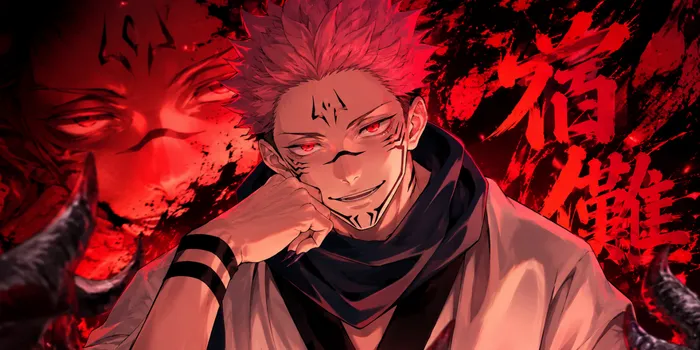
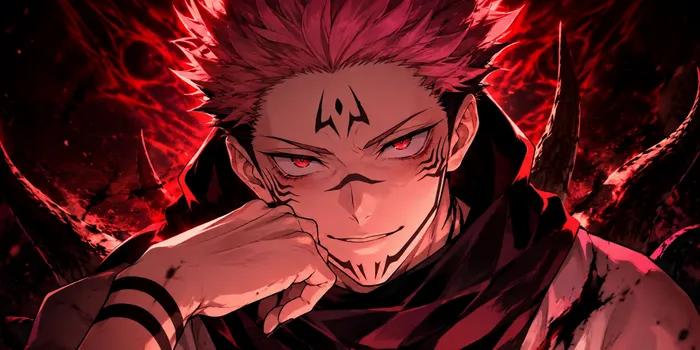
Who Is Ryomen Sukuna in JJK?
He is not a monster who wants to rule the world. He does not want followers, land, or revenge. He wants a fight worth remembering, and he will burn a city down to get one.
That is why the King of Curses hits harder than almost any modern antagonist, and the story never once softens him to make you comfortable.
This breakdown covers everything worth knowing: his Heian era origin, the twenty fingers, the Megumi possession, his true form, Malevolent Shrine, and the Gojo fight that split the fandom in half. No filler, no recap padding — just the parts that actually matter.
Ryomen Sukuna is a sorcerer who lived more than a thousand years ago and was strong enough that death barely inconvenienced him. When his body finally gave out, jujutsu society could not destroy his remains.
They did the next best thing. His soul was split into twenty indestructible fingers, sealed away as cursed objects, and quietly prayed over for centuries.
The name itself is a clue. "Ryomen" means two-faced, and old Japanese legend already carried a Ryomen Sukuna figure — a many-armed being killed by an imperial envoy.
In the JJK version, he is not a demon at the start. He is a human who chose cruelty so consistently that he became the standard curses are measured against.
The Nickname That Says Everything
He is called the King of Curses, and the title works on two levels at once. He is the strongest cursed presence alive, and he is also the thing curses themselves respect.
Special grade curses in the series treat him with something close to reverence. When a monster is scared of you, exposition becomes unnecessary.
Sukuna and Yuji Itadori
Yuji swallows the first finger and becomes the vessel, which sounds like a standard shonen power-up setup until you notice the terms.
Sukuna does not train him, mentor him, or bond with him. He mocks him, tests him, and waits patiently for a single opening — and years later, he takes it.
Heian Era Sukuna: The Origin Nobody Expected
The Heian era in JJK is the golden age of jujutsu, packed with sorcerers who would flatten modern-day special grades. Sukuna stood at the top of that era without a rival.
His flashback chapters strip away the glamour completely. He was born unwanted, physically abnormal, and discarded — a child treated as something to be hidden rather than raised.
What he did next is the part fans still find hard to sit with. He survived by devouring, including people, and shaped himself into the four-armed figure the series treats as legend.
Why the Origin Changes Everything
A lot of readers wanted a tragic backstory that excused him. The manga gives you the tragedy and then refuses the excuse.
Sukuna never blames his childhood. He treats it as irrelevant, because his philosophy is simple: love is a weakness, and connection is a leash.
The Twin Brother Reveal
His twin was absorbed in the womb, which is where the second face and the extra arms come from in-story. It also creates a distant blood link to Yuji's family line.
That link matters for one reason. The final battle is not curse versus human — it is one lineage settling an argument the other side never asked for.
Sukuna Domain Expansion: Malevolent Shrine Explained
Domain expansion is the ceiling of jujutsu, and most sorcerers build a sealed barrier that traps the opponent inside a guaranteed-hit space. Sukuna does not bother with the walls.
Malevolent Shrine manifests as a skeletal shrine in the open world, with no closed barrier keeping anyone in. Everything inside its radius simply gets cut.
The trade is brutal in his favor. He gives up the safety of an enclosure and gains a much larger effective range, which is why his domain reads more like a natural disaster than a technique.
Cleave and Dismantle
Inside the domain, those slashes fire relentlessly until he switches it off. Combined with a binding vow that adds explosive energy to pulverized matter, the space becomes nearly unsurvivable.
The Cost of Being That Strong
Domains drain cursed energy fast, and an open domain drains faster. Sukuna's arrogance is functional here — he can easily afford the bill almost nobody else can in jujutsu history.
That is also his one real vulnerability. Every fight against him becomes a strategic math problem about how long he can keep the shrine standing.
Sukuna Megumi: The Twist That Redefined the Series
For most of the story, Sukuna's interest in Megumi Fushiguro looks like curiosity about the Ten Shadows technique. It was never curiosity. It was shopping.
The takeover lands in Chapter 212 and it is genuinely cruel. Megumi freezes at the sight of his sister being puppeted, and in that pause, a finger goes down his throat.
Sukuna then uses Megumi's body and Ten Shadows as his own, unlocking Mahoraga and turning a beloved character into the villain's best weapon.
Why Megumi and Not Someone Stronger
Sukuna wanted three things from a vessel: a technique with growth potential, a body compatible with his soul, and a mind he could crush completely from the inside.
Megumi checked every box. Ten Shadows is a versatile toolkit, and his emotional attachment to Tsumiki gave Sukuna the perfect lever he needed.
The Rescue and the Fallout
Megumi is eventually separated and survives, which cost the heroes an absurd amount to achieve. The damage, though, is not the kind that heals in an epilogue panel.
That is the sharpest thing Gege Akutami does with the arc. Sukuna's worst act is not murder — it is taking someone's life away while leaving them alive.
Sukuna True Form: The Four-Armed Nightmare
In Yuji's body, Sukuna is a compressed version of himself — one extra mouth, one extra pair of eyes, and clear limits. His real body is a completely different conversation.
The full reveal lands in Chapter 238 during the Shinjuku showdown, once his incarnation is complete. Four arms, four eyes, two mouths, and a frame that completely dwarfs everyone around him.
The arms are not decoration. They let him attack, guard, and cast simultaneously, which removes the small openings sorcerers usually need to survive.
What the True Form Actually Upgrades
He debuts it against Hajime Kashimo, a Heian sorcerer who waited four hundred years for the fight. Sukuna treats it as a warm-up, which tells you exactly where the ceiling sits.
Height and Design Debates
There is no official height listed, and panel estimates float roughly between 180 cm and 245 cm depending on the scene. Fandom will never settle this debate.
The design borrows heavily from folklore statues and temple guardians, so the true form feels less like a shonen boss and more like something ancient dug out of a shrine floor.
Gojo vs Sukuna: The Fight That Broke the Internet
This is the matchup the series was built toward since Season 1, and it delivers in a way that left half the fandom thrilled and the other half absolutely furious.
Gojo is unsealed and steps onto the Shinjuku battlefield in Chapter 221. The duel proper runs through the mid-220s and closes in the mid-230s — around fifteen chapters of non-stop escalation.
Gojo opens with a maxed Hollow Purple and controls large stretches of the fight. Limitless and Six Eyes make him nearly untouchable, exactly as advertised.
How Sukuna Actually Won
Raw power did not decide it. Adaptation did.
Sukuna's Mahoraga — borrowed through Megumi's Ten Shadows — adapts to phenomena, and Sukuna deliberately fed it exposure to Limitless. Once the adaptation carried over to him, Infinity stopped being an absolute wall.
Gojo is cut down, and the manga does not give him a heroic recovery. The strongest sorcerer of the modern era loses because his opponent solved him systematically.
Gojo vs Sukuna Compared
| Factor | Satoru Gojo | Ryomen Sukuna |
|---|---|---|
| Core technique | Limitless + Six Eyes | Shrine (Cleave, Dismantle, Divine Flame) |
| Domain | Unlimited Void (sealed, information overload) | Malevolent Shrine (open, guaranteed slashes) |
| Defence | Infinity, near-perfect passive block | Reverse cursed technique, four-arm coverage |
| Experience | Roughly a decade at the top | Over a thousand years of combat memory |
| Deciding edge | Efficiency and precision | Mahoraga adaptation and borrowed techniques |
| Canon result | Killed in the Shinjuku showdown | Winner, then defeated later by Yuji's group |
Read the table and the pattern is obvious. Gojo lost a fair fight to an opponent who refused to fight fair, and who had centuries of options to pull from.
Why Fans Are Still Angry
The frustration is not really about power scaling. It is about pacing — Gojo's death arrives fast, mid-arc, without the grand send-off a decade of hype earned.
Akutami's point is consistent, though. In this world, being the strongest is a job title, not a plot shield.
Sukuna Finger: The Cursed Objects That Started It All
The twenty fingers are the engine of the entire plot. Each one holds a fragment of his soul, and each one is effectively indestructible.
They also work as bait. Curses swarm toward them, sorcerers scramble to seal them, and Kenjaku uses them to steer major narrative events for years.
How the Fingers Work
The design is elegant. Every arc is technically a fetch quest, but the object being fetched is a countdown toward the villain's own terrifying peak.
Sukuna Manga vs Anime: Where to Experience Him Best
The manga concluded in 2024 with Chapter 271, followed by a separate epilogue chapter at the end of December that year. His arc is complete on the page.
The anime is still catching up, which means the biggest Sukuna moments — the true form, the Megumi takeover fallout, the full Shinjuku fight — are ahead for anime-only viewers.
Quick Guide by Format
| Format | What you get | Best for |
|---|---|---|
| Manga (JJK, complete) | Full arc through Chapter 271 plus epilogue | Readers who want the whole story now without waiting. |
| Anime series | Peak animation, adapted through earlier arcs | Viewers who prefer dynamic choreography, voice acting, and sound. |
| Fandom media | Panel art, fight clips, and high-quality edits | Fans building profiles, phone setups, and social media hubs. |
Sukuna PFP, Wallpaper, and GIF Culture
There is a reason Sukuna dominates avatars and lock screens. His design is instantly readable at thumbnail size — dark markings, four eyes, and that flat, unimpressed stare.
The Gojo and Sukuna clash clips became a genre of their own. A single gif of the two standing across from each other communicates more hype than a full trailer.
If you are picking a profile image, panel crops from the true form reveal and the Shinjuku fight look sharpest, since manga panels scale better than compressed screenshots.
Sukuna Quick Facts Table
| Detail | Information |
|---|---|
| Full name | Ryomen Sukuna |
| Known as | King of Curses |
| Origin | Human sorcerer, Heian era |
| Era of dominance | Golden age of jujutsu, over 1,000 years ago |
| Cursed technique | Shrine |
| Domain expansion | Malevolent Shrine (Fukuma Mizushi) |
| Signature attacks | Cleave, Dismantle, Divine Flame, World Cutting Slash |
| True form | Four arms, four eyes, two mouths |
| Soul fragments | 20 indestructible fingers |
| Main vessels | Yuji Itadori, then Megumi Fushiguro |
| Loyal follower | Uraume |
| Japanese voice | Jun'ichi Suwabe |
| English voice | Ray Chase |
| True form revealed | Manga Chapter 238 |
| Takes Megumi's body | Manga Chapter 212 |
| Defeated | Manga Chapter 268 |
The table hides one strange truth. For a character who dominates the series, Sukuna spends most of it borrowing someone else's body — and still outclasses everyone.
What Makes Sukuna Work as a Villain
Great antagonists usually earn sympathy or fear. Sukuna earns something rarer: respect you resent giving him.
He never lies about who he is. He does not pretend his cruelty serves a cause, and he never asks the audience to understand him.
He also plays fair by his own rules — honouring binding vows, acknowledging skill in opponents, and refusing to cheat in ways he considers boring.
His Philosophy in Three Lines
That last one is why the ending works. Sukuna does not lose to a stronger technique so much as to a group of people willing to sacrifice for each other — the exact thing he dismissed as weakness.
The Yuji Contrast
Yuji is everything Sukuna rejected: loved, connected, and willing to die for people who cannot repay him.
Their final exchange lands because it is not a lecture. It is one person acknowledging that the other's way of living produced results his never could.
Frequently Asked Questions
Is Sukuna a curse or a human?
What is Sukuna's domain expansion called?
Who wins in Gojo vs Sukuna?
When is Sukuna's true form revealed?
Does Megumi get his body back from Sukuna?
How many Sukuna fingers are there?
Why did Sukuna choose Megumi as his vessel?
Final Verdict on the King of Curses
Sukuna endures because he refuses the deal most villains accept. No redemption, no softening, no late reveal that he was misunderstood the whole time.
Here is the insider read most power-scaling arguments miss: his real weapon was never Malevolent Shrine or the four arms. It was patience — a thousand years of it, spent waiting for one careless second from people who thought they had time.
If you are coming to him fresh, read the manga. The anime looks incredible, but the pacing of his reveals hits differently on the page, and the fight choreography in the Shinjuku chapters rewards a slow read.
And if you only take one thing from his arc, take the irony. The strongest being in Jujutsu Kaisen spent his whole existence proving connection was worthless, then lost to a kid who was held together entirely by it.
RETURN TO TOPThis article was written based on primary source material from Shueisha's Weekly Shonen Jump serialization, Viz Media's official English manga release, and Crunchyroll's licensed anime adaptation.